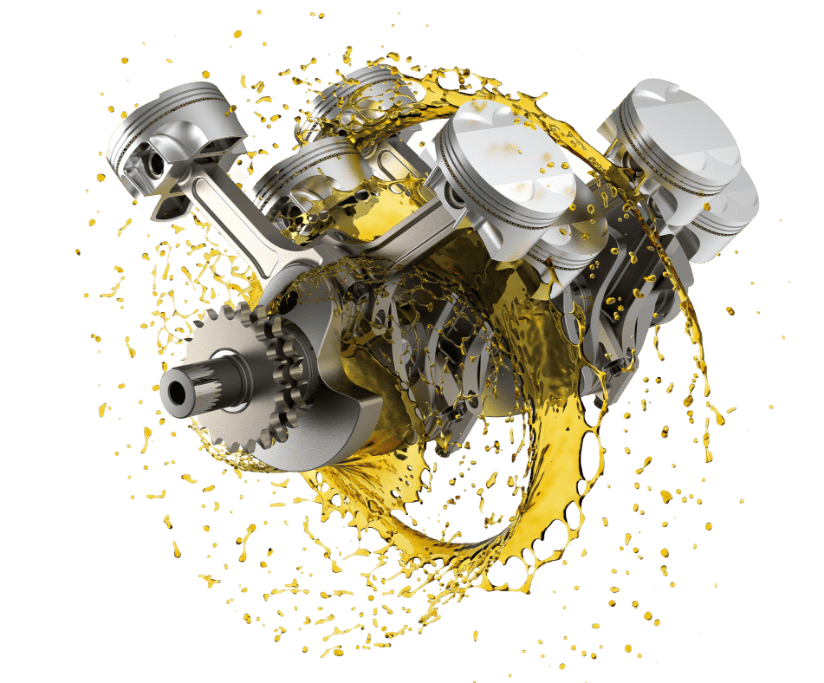

Lubricating oil plays a critical role in protecting machinery by reducing friction, minimizing wear, dissipating heat, preventing corrosion, and ensuring smooth operation. However, under certain operating conditions, lubricating oil can degrade much faster than expected, leading to reduced equipment performance, higher maintenance costs, and unexpected downtime.
Below are the ten most common reasons why lubricating oil deteriorates quickly and how to prevent them.
1. Excessive Operating Temperature
High operating temperatures are one of the leading causes of lubricant degradation. Excessive heat accelerates oxidation, causing the oil to thicken, darken, and form sludge and varnish deposits.
Prevention: Maintain an efficient cooling system and select a lubricant designed for high-temperature applications.
2. Water Contamination
Water contamination significantly reduces the lubricating properties of oil. It promotes corrosion, accelerates additive depletion, and can lead to bearing and gear failures.
Prevention: Regularly inspect the system for leaks, eliminate water contamination promptly, and store lubricants properly.
3. Dirt and Solid Contaminants
Dust, dirt, metal particles, and other contaminants act as abrasive materials inside the lubrication system, increasing component wear and shortening lubricant life.
Prevention: Keep filling points clean, maintain proper sealing, and replace filters according to the maintenance schedule.
4. Incorrect Viscosity Selection
Using oil with an unsuitable viscosity grade can result in insufficient lubrication or excessive friction, both of which accelerate oil degradation and equipment wear.
Prevention: Always follow the equipment manufacturer’s recommended viscosity grade.
5. Using the Wrong Type of Lubricant
Different machines require different lubricant formulations. Hydraulic oils, gear oils, compressor oils, turbine oils, and circulating oils are specifically engineered for their intended applications.
Prevention: Select the correct lubricant based on equipment specifications and operating conditions.
6. Mixing Different Lubricants
Mixing different brands, base oils, or additive packages may cause chemical incompatibility, resulting in sludge formation, foaming, or reduced lubricant performance.
Prevention: Avoid mixing lubricants whenever possible. Flush the system before changing to a different lubricant.
7. Extending Oil Drain Intervals
Even if the oil appears clean, its additives may already be depleted. Continuing to use degraded oil increases the risk of equipment wear and failure.
Prevention: Change the lubricant according to the manufacturer’s recommendations or based on oil analysis results.
8. Poor Filtration Performance
Clogged or inefficient filters allow contaminants to circulate throughout the lubrication system, accelerating both oil degradation and component wear.
Prevention: Inspect and replace filters regularly to maintain optimum cleanliness.
9. Operating Equipment Beyond Design Limits
Continuous operation under heavy loads, excessive speeds, or harsh conditions increases oil temperature and mechanical stress, shortening lubricant service life.
Prevention: Operate equipment within its recommended limits and perform routine maintenance inspections.
10. Lack of Regular Oil Analysis
Without periodic oil analysis, early signs of contamination, oxidation, additive depletion, or abnormal machine wear often go unnoticed until serious damage occurs.
Prevention: Implement a routine oil analysis program to support predictive maintenance and maximize equipment reliability.
Conclusion
Lubricating oil is a valuable asset that directly affects the performance and lifespan of industrial machinery. Understanding the factors that accelerate lubricant degradation allows maintenance teams to take preventive action before costly failures occur.
By selecting the appropriate lubricant, preventing contamination, maintaining effective filtration, and performing regular oil analysis, companies can significantly extend lubricant life, reduce maintenance costs, improve equipment reliability, and maximize overall operational efficiency.